只要中国领导人继续抵制人民币名义升值,那么,国内总体通胀率较高就是一个无法避免(在很大程度上也是希望看到)的结果。
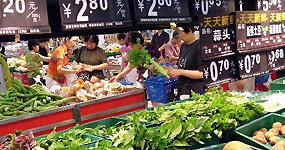
中国物价的上行趋势越来越明显:11月的年通胀率达到5.1%,高于10月的4.4%。通胀抬头一定程度上归咎于食品价格:在截至11月的一年里,中国食品价格上涨11.7%,高于10月的10.1%。与此形成反差的是,非食品价格同比涨幅仅为1.9%。
食品价格通胀是一个足以让任何政府不安的噩梦,而像中国这样有着不安全感的统治者最容易感到慌乱。食品价格对于总体通胀的强大影响,有效地提醒着人们,中国仍是一个多么贫困的国家。北京方面对食品价格可能引发社会不安定保持警惕。这也难怪:其威权体制不善于让人民和平地宣泄不满。
全球食品大宗商品市场是原因之一,但中国国内的情况也很重要。这方面的因素比较令人宽慰。推高蔬菜和猪肉价格的许多因素是可逆转的,生产商已经在对价格上涨作出反应。中国政府曾指示各银行掀起一场不寻常的放贷热潮,产生了明显的通胀效应——但北京方面自然也能够加以逆转。
在食品价格上涨趋势放缓的前提下,中国政府应当能够对总体通胀感到放心。北京方面拒绝采取任何可能被解读为屈从外国压力的举措,这降低了人民币走强的几率。因此,相对价格水平必须起到实际汇率上升的作用。美国与中国通胀率持续保持一定差距(如5%),也许是消除两国间持久金融失衡最平稳的出路。
这意味着中国的通胀率将在7%上下,这与中国的内部发展是吻合的。中国在生产率方面的大跃进——全要素生产率的年度增幅在全球金融危机之前触及3%——体现了中国作为世界工厂的角色。但是,强大的制造业所创造的财富,现在流入了非贸易部门,推高了这些领域的价格。经济学家们称之为巴拉萨-萨缪尔森效应(Balassa-Samuelson effect):居高不下的通胀是长期制造业繁荣的另一面。
话说回来,北京方面仍必须应对通胀的最具破坏性的效应。在特别关注食品价格的同时,还必须关注资本市场:银行储蓄回报率较低,已经在滋生一套平行的“影子”信贷体系。国家工业资本主义迟早也会需要更多受到监管的金融资本主义。
译者/何黎
http://www.ftchinese.com/story/001036062
As long as China’s leaders continue to resist a nominal appreciation of the renminbi, a higher domestic general inflation rate is an ineluctable – and largely desirable – result.
The trend in Chinese prices points increasingly upward: yearly inflation was 5.1 per cent in November, up from 4.4 per cent in October. The uptick is partly due to food prices, which grew by 11.7 per cent in the year to November, up from 10.1 per cent in October. Non-food prices, in contrast, were a mere 1.9 per cent higher than a year before.
Food price inflation is a nightmare haunting any government – and rulers as insecure as those in Beijing are the most easily rattled of all. The strong impact of food prices on general inflation serves as a useful reminder of what a poor country China still remains. Beijing is vigilant to the social unrest food costs can spark. No wonder: its authoritarianism is ill-equipped to let people air grievances peacefully.
Global food commodities markets are one cause, but domestic Chinese conditions matter too. These are reassuring. Many factors driving up vegetable and pork prices are reversible, and producers are already reacting to higher prices. Beijing has corralled banks into an extraordinary lending spree with clear inflationary effects – but this is within Beijing’s means to undo.
Provided food price growth slows down, China’s government should be relaxed about general inflation. Chances of a stronger renminbi are hampered by Beijing’s refusal to do anything that can be interpreted as doing another’s bidding. So relative price levels must do the work of real exchange rate appreciation. A consistent gap between US and Chinese inflation rates, say of 5 per cent, could be the smoothest way to unwind the perverse financial imbalance between the two nations.
The implied rate for China, some seven per cent, would be consistent with the country’s internal development. China’s great leap forward in productivity – annual total factor productivity growth touched 3 per cent before the crisis – reflects its role as the workshop of the world. But wealth created by manufacturing prowess finds its way into non-tradeable sectors and pushes prices up there. Economists know it as the Balassa-Samuelson effect: persistent inflation is the flip side of a secular manufacturing boom.
Still, Beijing must address inflation’s most disruptive effects. Special attention must be paid to food costs, but also to capital markets: low bank savings returns already encourage a shady parallel credit system. State industrial capitalism will sooner or later need more regulated financial capitalism as well.


没有评论:
发表评论