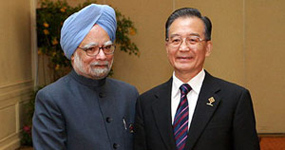
11月,当巴拉克•奥巴马(Barack Obama)离开德里时,美印企业达成了价值100亿美元的交易,现在温家宝的收获更大。本周温家宝访问印度期间,中印企业达成的协议总价值高达160亿美元。印中经贸往来的蓬勃发展是重要而可喜的。如果两国在政治关系方面也能取得类似进展,那将更好。
当然,两国经贸关系并非十全十美。虽然双边贸易额在过去20年增长了230倍,但今年600亿美元的水平仍然偏低。双边贸易还有欠平衡:中国对印贸易存在巨额顺差。同时,德里方面担忧双边关系具有半殖民性质:印度向中国输送原材料,中国则向印度输出制成品。不过,这些问题对于有决心的政界人士来说,并不是无法克服的。
但是,即使没有政治层面的帮助,经贸关系也势必改善。中印除了是近邻之外,两国人口加在一起占世界总人口的40%。随着两国经济不断增长,这两个亚洲大国之间必然会开展越来越多的经贸往来。
不过,若要在政治层面实现相称的关系改善,将需要付出更大努力。两国的政治制度大相径庭,而1962年的战争导致两国长期互不信任。有三个问题尤其需要谨慎处理。
中国宣称对印度东北的阿鲁纳恰尔邦(Arunachal Pradesh)拥有主权。迄今举行了14轮谈判,但仍未产生解决方案,同时印度已组建一支新的部队保卫该州。领土争端不是那么容易解决的。但是,中国已经与俄罗斯、蒙古、越南和缅甸解决了边界争端。与印度达成协议应该不是不可能的。成功将构建信任,进而有助于缓解第二个紧张来源:印度对中国与巴基斯坦紧密关系的担心。
第三个争议焦点是水资源。印度多条大河的源头在喜马拉雅山脉的中国一侧。印度担心中国的水坝建设项目将剥夺印度的水资源。
管理这些问题的一个最起码条件是,两国进行更频繁和公开的对话。温家宝本周宣布,两国的高层会晤将会增加。这是一个好的开始。
中印都有很好的理由进一步加深两国关系。更好的双边关系将增加他们在世界事务(从贸易到多边组织的改革)中的份量,两国在这些领域有共同利益。这是一个值得努力的目标。
译者/和风
http://www.ftchinese.com/story/001036078
In November, Barack Obama returned from Delhi with $10bn worth of deals with Indian business. China’s premier, Wen Jiabao has gone one better. The agreements Mr Wen struck this week in India total $16bn. The burgeoning of India and China’s economic ties is important and welcome. A similar improvement in their political relations would be better still.
Of course, economic relations are not perfect. Although it has increased by a factor of 230 in the past 20 years, bilateral trade is still low at $60bn. It is also unbalanced: China runs a huge surplus in its dealings with India. And Delhi frets that the relationship is semi-colonial: India sends China raw materials, which it returns as manufactured goods. These problems, however, are not insurmountable for determined politicians.
But even without political help, economic links are bound to improve. Apart from being neighbours, China and India account for 40 per cent of the world’s population. As their economies grow, it is inevitable that Asia’s twin giants will do ever more business.
A matching improvement in political ties, however, will require more effort. The two countries have diametrically opposed political systems. And a war in 1962 left a legacy of mistrust on both sides of the Himalayas. Three issues, in particular, need careful handling.
China claims Arunachal Pradesh, a province in north-eastern India. Fourteen rounds of talks have failed to deliver a solution and India has raised a battalion to defend the province. Territorial quarrels are not easily resolved. But China has settled border disputes with Russia, Mongolia, Vietnam and Burma. A deal with India should not be impossible. Success would build trust, which in turn would help ease the second source of tension: Indian fears about China’s close ties with Pakistan.
The third bone of contention is water. The headwaters of various Indian rivers are on the Chinese side of the Himalayas. India fears that China’s dam-building projects may deprive it of its water.
A minimal condition for managing these issues is for both countries to talk more frequently and openly. Mr Wen announced this week that high-level meetings between the two countries will increase. This is a good start.
Both countries have good reason to go further. A better bilateral relationship will enable them to punch their weight in world affairs – from trade to reform of multilateral organisations – where their interests coincide. That is a prize worth pursuing.


没有评论:
发表评论